
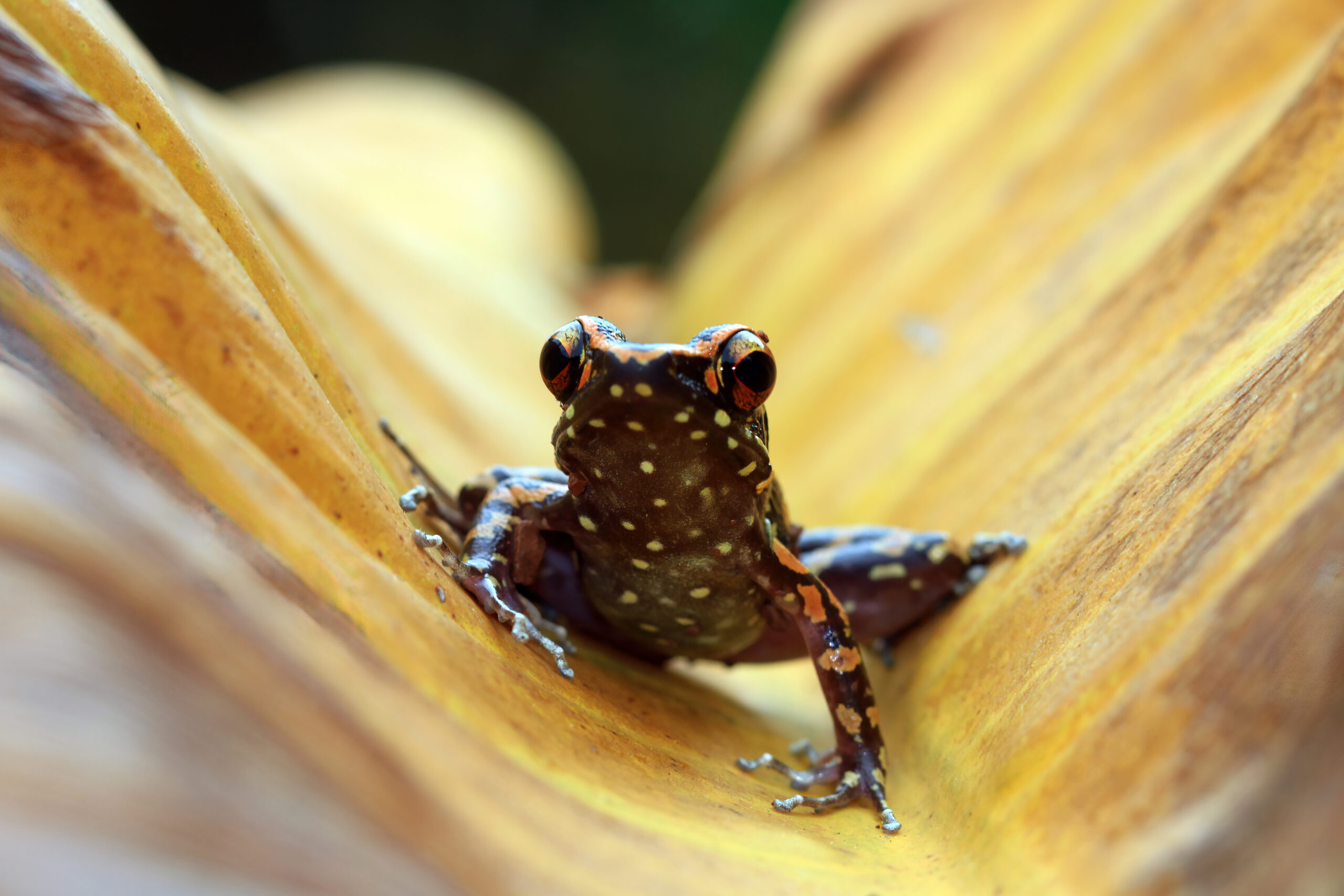
Scientists at the Pontificia Universidad Católica del Ecuador have formally recognized Pristimantis milpe as a distinct frog species after it was mistakenly identified as another species for more than a century. By examining 19th-century specimens preserved at the Natural History Museum in London and comparing them with living frog populations in Ecuador, researchers were able to resolve the long-standing classification mystery. The Milpe Robber Frog is not rare or difficult to find. It is widespread across more than 67,000 square kilometers of the Chocó forests of western Ecuador and southern Colombia. The frog is active at night, with males producing a distinctive clicking call from leaves several meters above the forest floor. The discovery highlights the importance of natural history collections, showing how specimens preserved for centuries can still provide valuable scientific evidence. It also demonstrates that even common and widespread species can remain scientifically overlooked, and that combining historical museum collections with modern observations can reveal previously hidden biodiversity.