
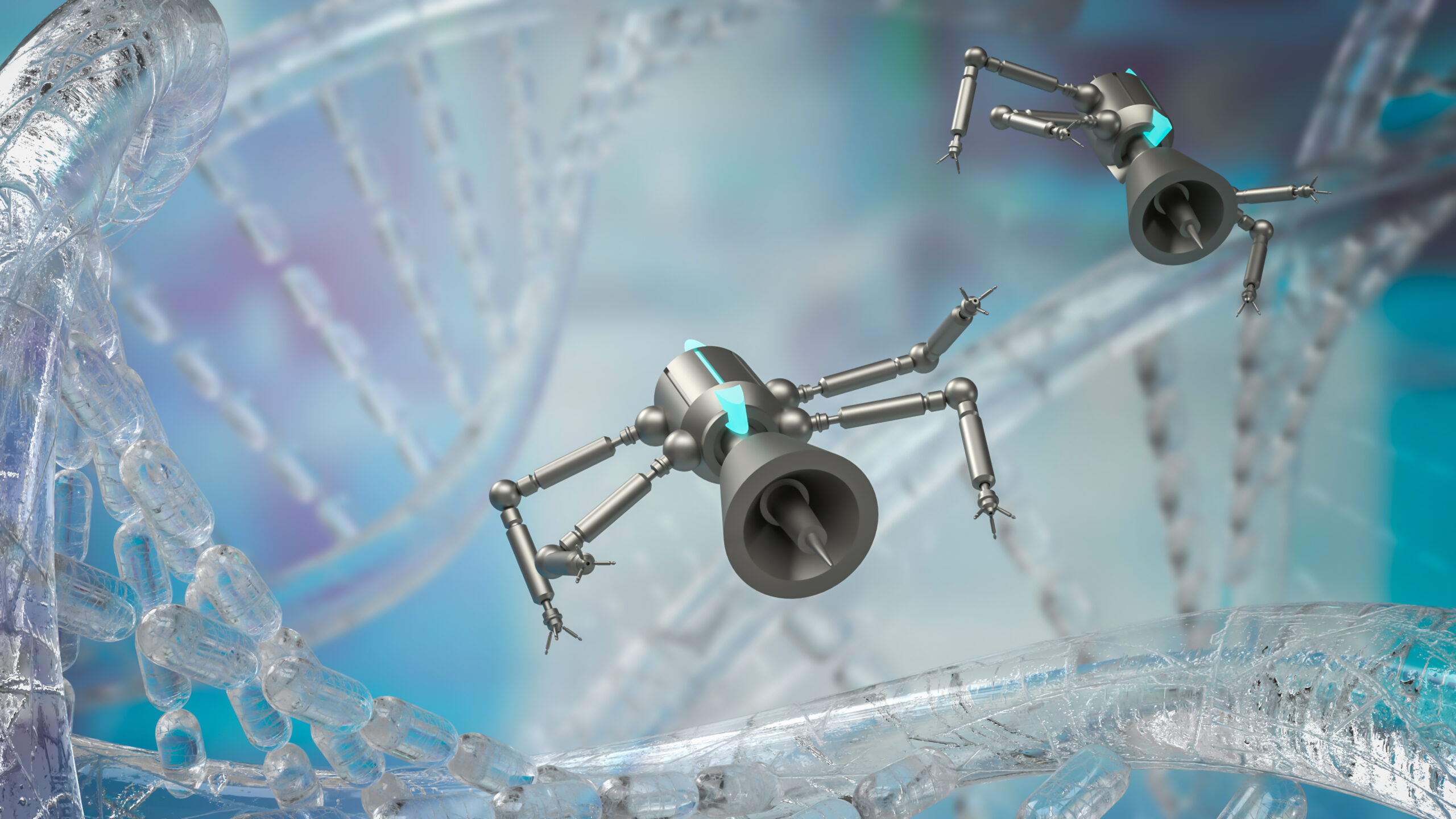
Scientists at the University of Würzburg have developed microscopic robots that use light to navigate through liquids, locate bacteria, and transport them to specific locations. Measuring less than one micrometer, the robots are around 50 times smaller than the diameter of a human hair, allowing them to operate directly in the microbial world. The tiny robots are powered and steered using light. Their nanoscale antennas convert photon recoil into motion, while changing the polarization of the light controls their direction. They can make rapid 90-degree turns and selectively capture, carry, and release groups of bacteria, even while remaining maneuverable under the added load. The technology could open new possibilities for manipulating cells and microorganisms with high precision, with potential applications in microbiology, biomedical research, and microscopic environmental cleanup.